Water treatment chemicals and the role of detailed explanation

There are many kinds of water treatment chemicals, mainly including flocculants, scale inhibitors, corrosion inhibitors, biocides, defoamers and cleaning agents. These agents play a vital role in the water treatment process.

Flocculants: used to accelerate the coagulation of suspended particles and help impurities in water to form large particles for subsequent treatment.

Scale inhibitors: prevent scale formation and protect pipes and equipment from scale blockage and corrosion.

Corrosion Inhibitors: Reduce the corrosion rate of metals in water and extend the service life of equipment.

Bactericide: kill bacteria and microorganisms in water to ensure safe water quality.

Antifoam agent: Eliminate foam in water, improve treatment efficiency.

Cleaning agent: used to clean pipes and equipment, remove residual impurities and dirt.

In addition, water treatment chemicals can be divided into general water treatment chemicals and specialized water treatment chemicals. General water treatment chemicals include alum, chlorine, ferric sulfate, ferric chloride and polymerized aluminum chloride. Specialized water treatment chemicals are divided into single chemicals (such as organic flocculants) and formulated products (such as biocides, anticorrosives and scale inhibitors, etc.). The rational use of these chemicals can effectively improve water quality and protect the environment and human health.
Manufacturer and exporter of polyacrylic acid

Karui Chemical is a professional water treatment agent manufacturer with years of production and sales experience, and its products are sold to many countries and regions around the world. Polyacrylic acid is a common water treatment agent product and one of the main products produced by the company.

Contact Us
TEL:+86-632-3671188
FAX: +86-632-3671189
E-mail:export@krchemical.com
ADD:Xuecheng Chemical Industrial Park,Zaozhuang City, Shandong Province, China

What is the CAS number of THPS

THPS CAS number:55566-30-8 EINECS No.259-709-0 Molecular Formula:C8H24O12P2S Molecular Weight:406.27 For more information, please refer to: https://www.kairuiwater.com/thps.htm

TEL: +86-632-3671188  FAX: +86-632-3671189  E-mail:export@krchemical.com  E-mail:export@krchemical.com ADD: No.1, Fuqian South Road, Xuecheng Chemical Industrial Park, Xuecheng District, Zaozhuang City, Shandong Province, China

55295-98-2 What product does it stand for

CAS number 55295 – 98 – 2 represents the polymer of cyanoguanidine, ammonium chloride, and formaldehyde. It is also known as dicyandiamide – formaldehyde resin. Here are its basic properties and uses: –

Basic Properties

It is a quaternary ammonium – type cationic polymer compound, usually in the form of a yellow – brown viscous liquid or a solid powder. It has good water – solubility and can dissolve in water to form a clear solution. –

Uses

It is mainly used as a decolorizing flocculant, which has functions such as decolorization, flocculation, and COD raoval. It can be used in the treatment of industrial wastewater and dyeing wastewater to raove colored substances and suspended solids in the water, improve water quality, and reduce environmental pollution.

Differences between EDTMPA and EDTMPS

EDTMPA (ethylenediamine tetramethylenephosphonic acid) and EDTMPS (ethylenediamine sodium tetramethylenephosphonate) are two common organic phosphoric acid condensates, which are widely used in the fields of water treatment, industrial cleaning and metal corrosion inhibition. The main differences between them are as follows:

Chemical structure:

EDTMPA: ethylenediamine tetra-methylenephosphonic acid, the molecular structure contains four carboxyl groups and one ethylenediamine group, no phosphorus element.

EDTMPS: Ethylenediamine tetra-methylenephosphonic acid, the molecular structure contains five phosphate groups and one ethylenediamine group.

Phosphorus Content:

EDTMPA does not contain phosphorus, its scale inhibition comes mainly from the complexation of carboxyl groups with metal ions.

EDTMPS contains phosphorus, so in addition to scale inhibition, it also has the properties of phosphorus chemicals, such as the inhibition of metal corrosion by phosphorus chemicals.

Application areas:

EDTMPA is mainly used in the field of water treatment, such as scale inhibition, dispersion and complexation of metal ions.

In addition to water treatment, EDTMPS is also commonly used in metal corrosion inhibition and oil field water injection, etc. Its phosphorus-containing structure helps prevent metal corrosion.
Performance Differences:

Due to the presence of phosphorus-containing elements, EDTMPS may perform better in metal corrosion inhibition.

In terms of scale inhibition and dispersion, the performance of both is relatively similar, but may vary depending on the specific application environment and conditions.

Overall, EDTMPA and EDTMPS have significant differences in chemical structure, phosphorus content, and application areas, and should be evaluated for specific needs and applications.

Instructions for Use of Silicone Defoaming Agent

Silicone defoamers are commonly used defoamers suitable for a wide range of industrial applications. The following are general usage instructions:

1. Product Features

Excellent defoaming performance: effectively inhibits foam formation and rapidly eliminates existing foam.

Chaical stability: stable in high-taperature, h3 acid, and h3 alkali environments, with broad applicability.

Low concentration usage: typically only a small amount is needed to achieve good defoaming results.

2. Usage Methods

Dilution: Dilute with water or other media according to the product manual as needed.

Addition Methods:

Pre-addition: Add the defoamer to the systa before the production process begins to prevent foam formation.

Post-addition: Add the defoamer directly to the foam area once foam has formed.

Mixing: Ensure the defoamer is thoroughly mixed with the medium to achieve uniform dispersion.

3. Dosage

The dosage is generally 0.01% to 1% of the total product volume (specific dosage depends on foam conditions and usage environment). It is recommended to conduct small-scale trials to determine the optimal dosage.

4. Precautions

Storage: Store in a cool, dry place, away from direct sunlight and high taperatures.

Compatibility: Conduct compatibility testing before large-scale application to avoid adverse reactions with other additives.

Safety: Follow safety operating procedures and wear appropriate protective equipment when using.

5. Application Areas

Paints: Prevents foam formation during spraying and coating processes.

Cleaning agents: Used in cleaning agents to enhance their cleaning efficacy.

Paper, textile, food processing, etc.: Widely used in various industrial processes requiring foam suppression.

Please refer to the technical data sheet (TDS) or safety data sheet (SDS) for specific products to obtain detailed information and ensure proper and safe use of the silicone defoamer.

Are scale inhibitors hazardous chemicals?

Scale inhibitors are generally not classified as hazardous chemicals, but specific circumstances must be assessed based on their composition and properties.

Generally, common scale inhibitors such as organic phosphonates (e.g., HEDP, ATMP, etc.) and polycarboxylic acids, under normal use and storage conditions, do not possess hazardous characteristics such as flammability, explosiveness, toxicity, or harmfulness, and are therefore not classified as hazardous chemicals.

However, some scale inhibitors may contain specific chemical components or exhibit certain hazardous properties under specific concentrations or conditions. For example, scale inhibitors containing strong acids or strong bases may have corrosive properties; certain phosphorus-containing scale inhibitors, if discharged in large quantities, may cause environmental hazards such as eutrophication. For such scale inhibitors with potential hazardous properties, production, storage, transportation, and use must be conducted in accordance with relevant hazardous chemical management regulations.

hedp chemical price trends

The price of chemical HEDP is influenced by many factors, such as raw materials, supply, market competition, policies and regulations.

In addition different distances, different packaging, different manufacturers offer different prices.
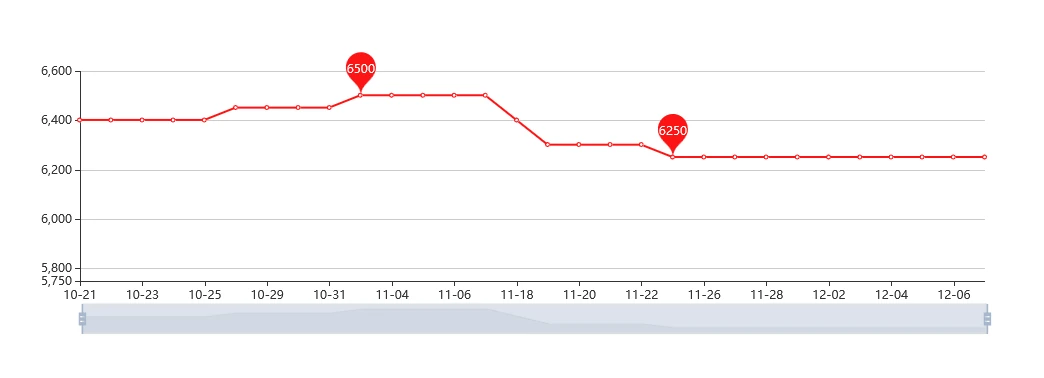
But the most important influencing factor is raw materials, and the main raw material of HEDP is phosphorus trichloride, here we look at the price of phosphorus trichloride:

phosphorous trichloride

Overall the price of phosphorus trichloride is still a certain fluctuation, the recent fluctuations between 10-20%, if you want to know the latest price of HEDP can be directly with us, we as a larger manufacturer of water treatment chaicals, will provide the latest price!

TEL:  +86-632-3671188
FAX:  +86-632-3671189
E-mail: export@krchemical.com
ADD: No.1, Fuqian South Road, Xuecheng Chemical Industrial Park, Xuecheng District, Zaozhuang City, Shandong Province, China

PESA Packaging and Storage?

PESA, as a high-performance green water treatment agent, has standardized packaging and storage requiraents to ensure product stability and safe usage.

Below are common packaging and storage guidelines for PESA:

Polyepoxysuccinic Acid is typically sold in liquid form (occasionally as solid powder, though less common). Common packaging specifications include:

Plastic drums (IBC ton drums):

Capacity: 1000 liters (approx. 1 ton/drum)

Material: High-density polyethylene (HDPE)

Features: Suitable for large-scale industrial users, cost-effective, and convenient for forklift transportation and stacking. This is the most common industrial packaging.

Plastic drums:

Capacity: 25 kg, 50 kg, 200 kg, 250 kg

Material: High-density polyethylene (HDPE) or polyethylene terephthalate (PET)

Features: Suitable for small to medium-sized users or laboratory applications. Easy to handle and manage.

Specialized Liquid Bags:

Capacity: 20-25 tons (for container transport)

Features: Ideal for bulk procuraent and international trade, offering lowest cost but requiring specialized handling equipment.

Proper storage is critical for maintaining PESA quality. Adhere to the following conditions:

Storage Environment:

Indoor Storage: Preferred option. Store in a cool, dry, well-ventilated warehouse.

Avoid Extrae Taperatures: Maintain storage taperatures between 5°C and 40°C.

Freeze Protection: Although PESA aqueous solutions have a low freezing point, prolonged freezing may cause product separation or property changes, affecting efficacy. If frozen, allow complete thawing at room taperature and thoroughly mix before use.

Sunlight Protection: Strictly prohibit outdoor storage. Avoid direct sunlight and keep away from heat sources (e.g., boilers, radiators).

Packaging Integrity:

Maintain strict container sealing to prevent concentration changes due to moisture evaporation and to block foreign material ingress.

Stacking Requiraents:

HDPE drums should not be stacked excessively high to prevent deformation of lower containers. Adhere to the stacking weight limits indicated on the packaging.

IBC ton containers may be stacked in single or double layers, provided the pallet and structure are stable.

Compatibility:

No special corrosion-resistant materials are required. Containers and piping made of HDPE, PP, PVC, fiberglass-reinforced plastic (FRP), etc., are suitable for storing and transporting PESA.

Avoid prolonged contact with metals such as carbon steel, copper, or aluminum to prevent slow equipment corrosion and subsequent product contamination by metal ions. Use plastic or stainless steel (304/316) pumps and piping.

Hydroxyethylidene Diphosphonic Acid (HEDP): A Versatile Water Treatment Chemical
Hydroxyethylidene diphosphonic acid (HEDP) is a highly effective and versatile water treatment chemical that has gained widespread recognition for its exceptional properties and diverse applications. In this article, we will delve into the unique characteristics, uses, and benefits of HEDP in various industries.
Properties of HEDP: HEDP is a strong chelating agent with excellent sequestering and dispersing properties. It exhibits high thermal stability, chemical stability, and compatibility with a wide range of water treatment chemicals. HEDP is soluble in water and capable of forming stable complexes with metal ions, making it an ideal choice for controlling scale formation and corrosion in water systems.

Applications of HEDP:

2.1 Water Treatment: HEDP4na is extensively used in water treatment processes to inhibit scale formation and prevent corrosion in industrial water systems. It is employed in cooling water treatment, boiler water treatment, and desalination plants to maintain system efficiency and prolong equipment lifespan. The chelating and dispersing properties of HEDP help in sequestering metal ions and preventing scale deposition on surfaces.
2.2 Oil and Gas Industry: In the oil and gas industry, HEDP plays a crucial role in well stimulation and production enhancement. It is utilized as a scale inhibitor in oilfield operations to prevent mineral scale deposition in pipelines, reservoirs, and production equipment. HEDP’s effectiveness in inhibiting scale formation helps ensure uninterrupted production and reduces maintenance costs in oil and gas fields.
2.3 Household Cleaning Products: HEDP is a key ingredient in various household cleaning products, including detergents, dishwashing liquids, and surface cleaners. Its sequestering properties aid in water softening and preventing mineral deposits on surfaces, ensuring clean and spotless results. HEDP enhances the performance of cleaning formulations by improving water quality and reducing soap scum buildup.
2.4 Industrial Cleaning: In industrial cleaning applications, HEDP is used as a metal chelating agent and corrosion inhibitor in metal cleaning solutions. It helps remove scale, rust, and other contaminants from metal surfaces while providing protection against corrosion. The sequestering properties of HEDP contribute to the efficiency and effectiveness of industrial cleaning processes, leading to enhanced surface cleanliness and maintenance.
2.5 Agriculture: HEDP finds application in agriculture as a nutrient stabilizer and soil conditioner. It helps improve nutrient uptake by plants, prevent nutrient leaching, and enhance soil structure. By chelating metal ions in the soil, HEDP promotes plant growth, increases crop yield, and supports sustainable agricultural practices.
Conclusion: Hydroxyethylidene diphosphonic acid (HEDP) is a versatile water treatment chemical with a wide range of applications across various industries. Its exceptional chelating, sequestering, and dispersing properties make it an indispensable component in water treatment, oil and gas operations, household cleaning products, industrial cleaning, and agriculture. As the demand for effective water treatment solutions continues to grow, HEDP remains a reliable and efficient choice for addressing scale formation, corrosion control, and other water-related challenges in diverse settings.